A BIT OF COMMON SENSE: LOUISE FAGERSEN ON GIVING THE HORSE A VOICE


(No part of this article may be copied or reproduced in any form without the permission of HT)
IT STARTED WITH A COMMON FRUSTRATION: A SENSITIVE HORSE AND A MARKET FULL OF CLUNKY, OUTDATED BITS. BY LOOKING AT HOW TACK ACTUALLY BEHAVES UNDER SADDLE, LOUISE FAGERSEN HAS REDEFINED EQUESTRIAN COMFORT. FROM SPACE-AGE TITANIUM TO GAME-CHANGING CURVED CHEEKPIECES, HORSE TIMES TALKS WITH THE FOUNDER OF FAGER BITS TO DISCOVER HOW ONE BRAND IS PUTTING THE HORSE’S VOICE BACK INTO THE CONNECTION.
1. Louise, every single Fager bit has a human name, like Maria, Sally, or Gustav. How do you choose the names, and have you ever named a bit after a horse or person who was a complete nightmare to deal with?
The names usually don’t have a very specific background. We mostly throw around different names until something just feels right.
Lately, we’ve started trying to separate some collections with female or male names depending on the material, just to make it a bit easier, but unfortunately that’s not something I thought about from the beginning.
Sally is actually named after my dog. I had a feeling that bit was going to be a success, and it really was.
Maria is named after my younger sister, and just like her, that bit turned out very unique and very popular.
2 .What was the original inspiration behind founding Fager?
I struggled to find a suitable bit for my own horse. During a check-up, I realised that many bits changed angle significantly once the horse was ridden with contact, compared to how they sat in the stable without pressure. This meant the pressure points under saddle were often completely different from how they appeared at rest. That discovery became the starting point for Fager.
3. While bit concepts like the Pelham or snaffle are centuries old, how have modern materials and weight changed their effectiveness?
We always look for answers in the horse’s reaction. As horses have become finer, more sensitive, and more reactive through modern breeding, we need to adapt our equipment to what they comfortably accept first, as that is the foundation for training and true teamwork.
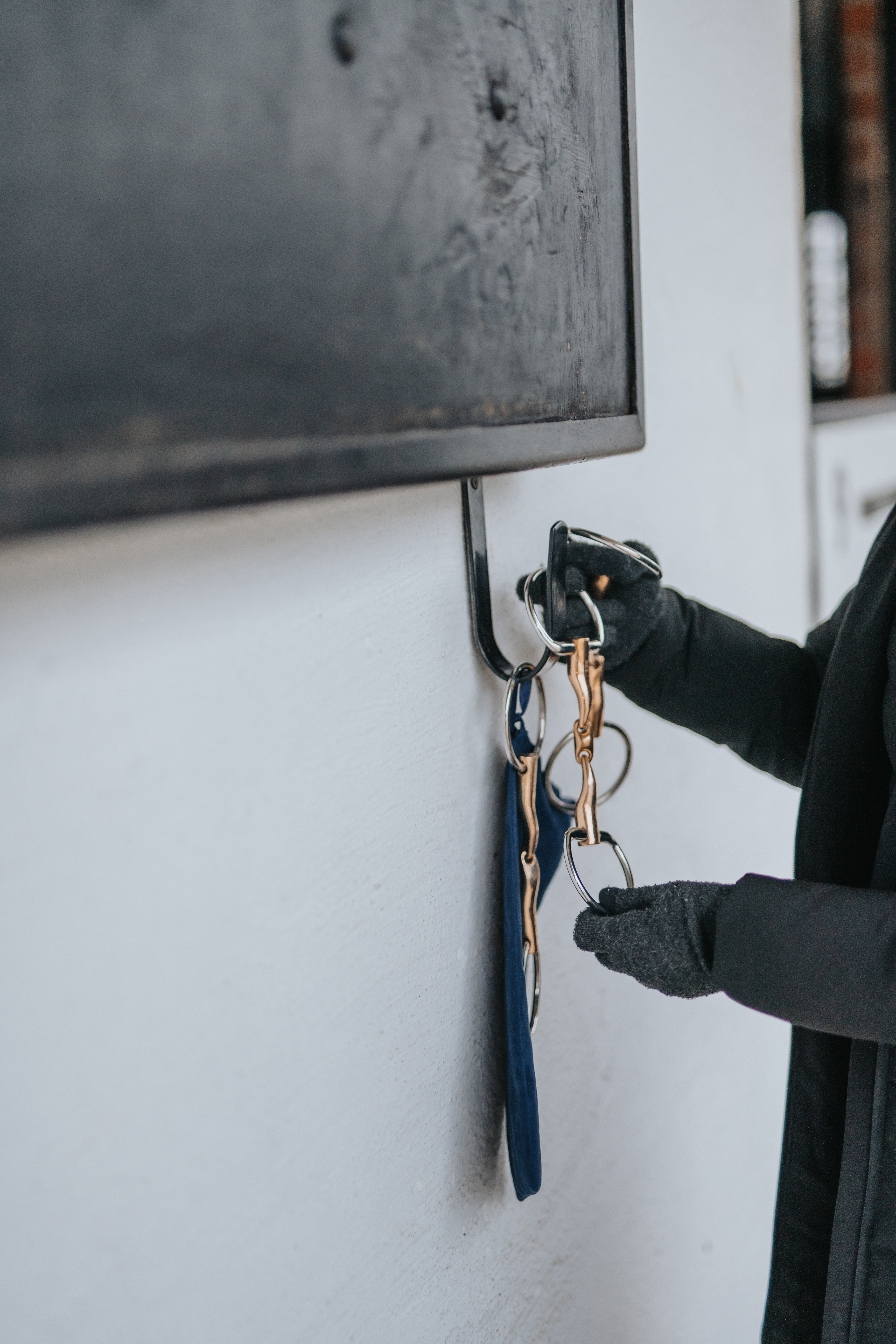
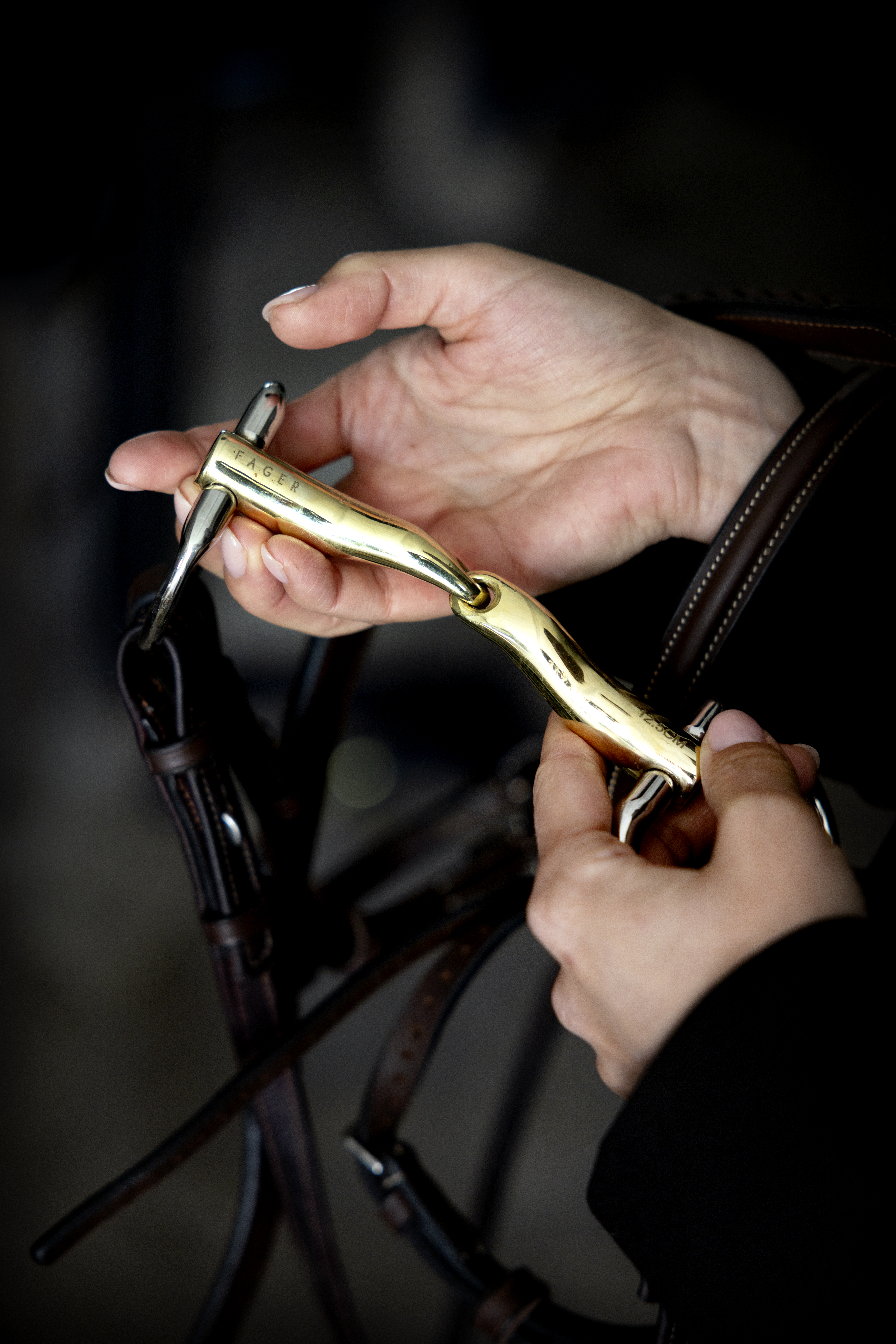
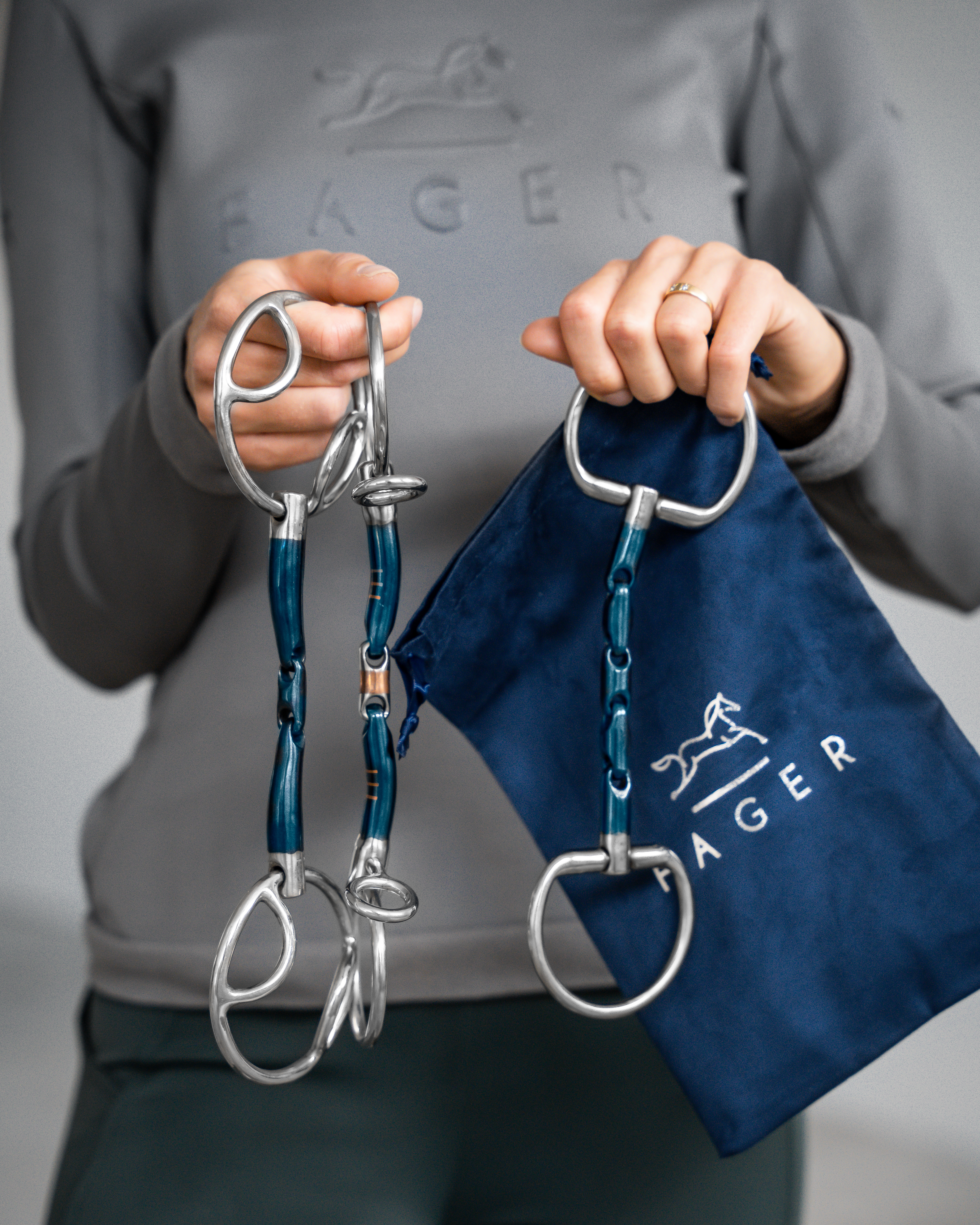
Every horse responds differently, but in general, we see that many prefer bits that take up less space in the mouth, are lighter, and feature a more forgiving angle that creates room for the tongue. Our Soft Joint designs have also been highly successful because they provide the flexibility of a broken bit without the concentrated pressure points of traditional joints.
So yes, during bit fittings, we often notice a very clear difference in how horses respond to variations in material, weight, and design.
4. Many riders struggle with straight cheekpieces hitting the noseband and rubbing the sides of the horse's face; Fager designed them with a curve. Is that why you curved them, or is there another explanation?
I assume you mean our Baby Fulmer, which we developed to give the horse clearer guidance and stability. This is one of the models I’ve spent the most time developing to get the angles exactly right. The upper and lower parts of the cheekpiece are shaped differently, so it’s vital to fit the bit correctly to ensure the cheeks stay away from the skin.
Without the curve, the cheekpieces would cause sores on a lot of horses. The angle is crafted in two steps—both forward and outward—to keep the bit stable without it pressing into the face.
Because the ring is loose and sits slightly away from the Baby Fulmer itself, it rotates differently compared to a fixed cheek. The design is also forgiving enough to sit correctly even if someone happens to ride with a bit that is slightly too long, or takes a stronger rein contact.
5. What materials or combinations of materials do you use in your bits, either alongside or instead of stainless steel?
Stainless steel is a reliable material, but many horses dislike the metallic taste and how cold it gets in winter. Sweet iron alters the taste into something many horses prefer, which often encourages a softer contact.
Titanium is one of my personal favourites; it neutralises the metallic taste, weighs less, and adapts more quickly to the horse’s mouth temperature, so it never feels uncomfortably cold. Copper or Sweet Gold can encourage horses that tend to drop the contact to seek the bit more. By combining different materials, you can achieve vastly different reactions.
We also use TPU in various hardnesses for horses that struggle to accept metal, or bits in general. Leather offers incredible acceptance too, which is why we provide leather bits. However, because leather can be easily damaged if a horse chews on it, we developed leather covers that can be attached to a normal bit instead. It’s an excellent way to test how the horse reacts to leather without risking ruining a brand-new bit on the first ride.
6.We’ve seen trends like "blue bits" and leather-covered mouthpieces come and go. What is your take on these fashions?
I wouldn’t really call them trends, as both blue bits and leather-covered mouthpieces have existed for a very long time, particularly in the Western world. I think people simply forget about them until they get a sensitive horse and start looking for alternative solutions that the horse might find more comfortable.
7. What are the specific benefits of combining different metals within a single bit design?
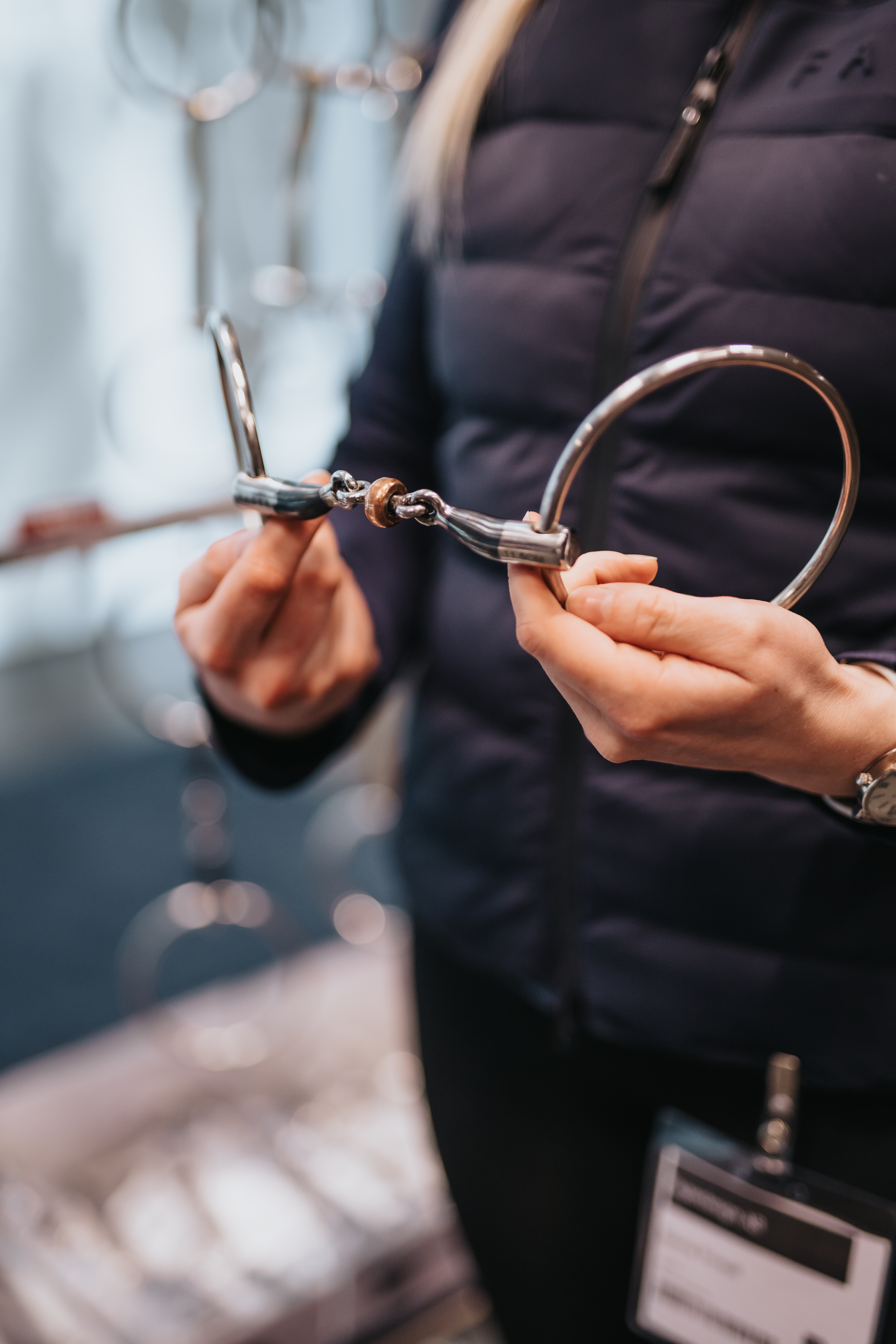
For example, if you combine the benefits of titanium and copper, you get a bit that feels light and is easy for the horse to accept, while a copper roller in the centre gives the horse something to play with without making the mouthpiece feel too fixed.
If, on the other hand, you have a horse that easily drops the contact but can also feel a bit stiff in the connection, I would choose sweet iron combined with a copper roller. That combination usually creates more acceptance and support, while the roller keeps the horse softer and more relaxed in the contact.
You can then take it a step further depending on the horse and rider. If the rider has unsteadied hands, or the horse tends to overreact to rein aids, I would add a forward lock to stabilise the bit and prevent it from becoming too mobile. For sensitive horses with very active tongues, an upward lock can help create a calmer, more stable feeling in the mouth.
10. In what scenario would you recommend an asymmetrical bit, such as one with a smooth side and a twisted side?
At the moment, I honestly struggle to find a good reason to recommend an asymmetrical bit like that, unless the horse has a specific mouth injury or pathology. In those cases, I would personally prefer to go bitless. It’s not something we offer or sell at Fager.
11. How do you balance traditional bitting principles with the need for modern, anatomical innovation?
Honestly? Mostly common sense. I’m a little allergic to the word “anatomical” because it’s used for almost everything today, whereas horses are built very differently and accept very different things. But at the same time, I use the word myself because it’s easy for people to understand.
For me, it’s more important that riders understand what the bit actually does and why they are using it. If you can explain that simply, you’ve come a long way. As a company selling bits, I believe we have a responsibility to educate riders, just as riders have a responsibility to learn what actually suits their own horse. People are always welcome to contact us; we love talking about bits.
12. Could you shed some light on the specific innovations Fager is currently developing for the future?
There are a lot of exciting things happening right now, even though I can’t go into too much detail just yet - and it’s not only bits we’re developing.
On the bit side, we are currently testing a completely new cheekpiece design that addresses several issues I’ve been trying to improve for a long time. It's designed especially for sensitive horses that rub easily, but it also creates a nicer parallel angle from the corner of the mouth to the rein, giving clear guidance without feeling too stiff. I have very high hopes for this one, but it’s still in the testing stage.
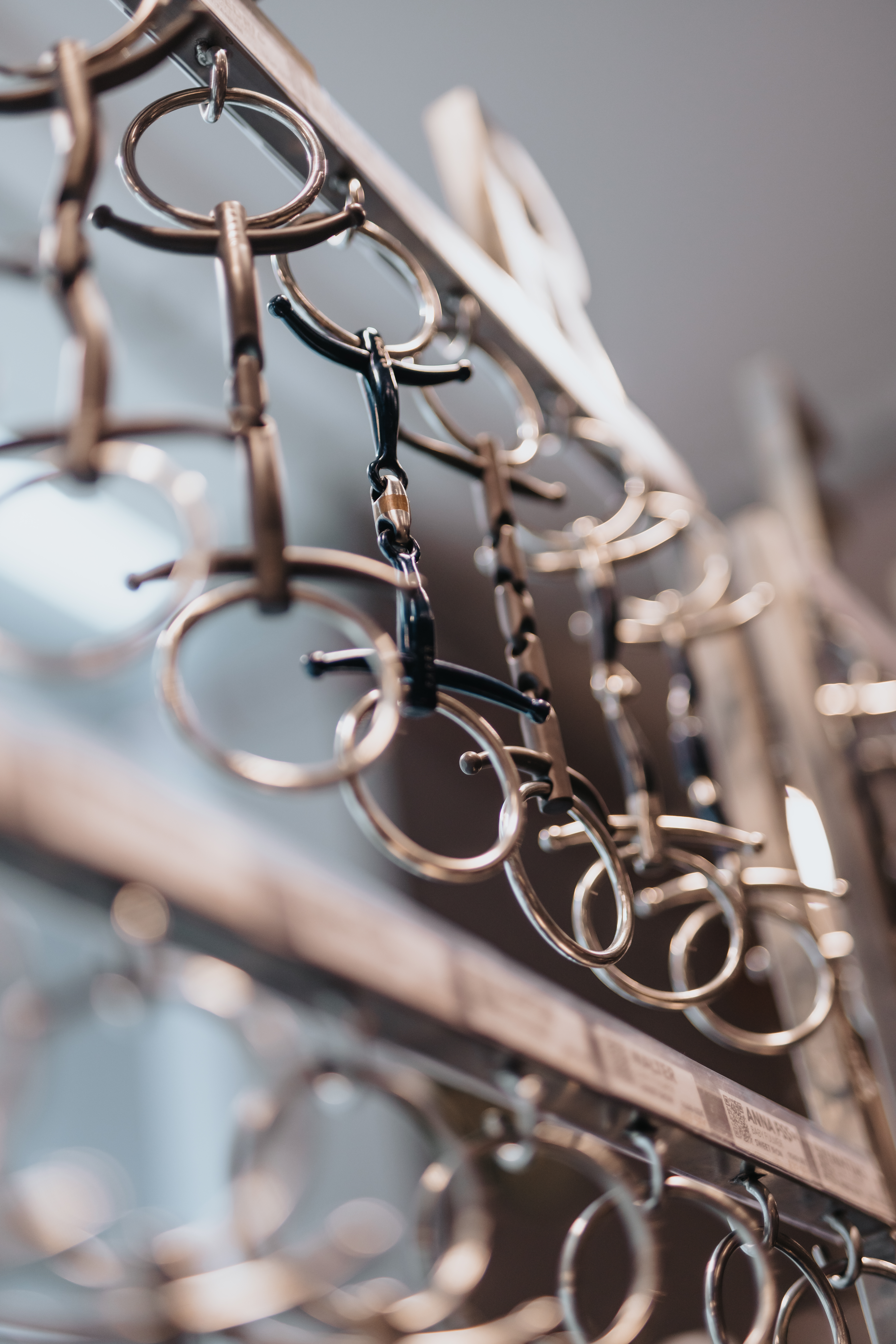
We’re also continuing to expand our TPU series; our ultimate goal is to create the world’s largest range of TPU and rubber bits. A completely new line called ComfyCurve will also launch in the near future, and our Basic Line is about to expand with several new mouthpieces currently undergoing testing.
There’s really no end to the ideas, and our goal is always to create something better than what is currently on the market. To accommodate all of these future innovations, we are even planning to extend our warehouse. I truly think what's coming next will make a lot of horses and riders happier.
There are a lot of exciting things happening right now, even though I can’t go into too much detail just yet, and it’s not only bits we’re developing.
On the bit side, we are currently testing a completely new cheekpiece design that addresses several issues I’ve been trying to improve for a long time. It's designed especially for sensitive horses that rub easily, but it also creates a nicer parallel angle from the corner of the mouth to the rein, giving clear guidance without feeling too stiff. I have very high hopes for this one, but it’s still in the testing stage.
We’re also continuing to expand our TPU series; our ultimate goal is to create the world’s largest range of TPU and rubber bits. A completely new line called ComfyCurve will also launch in the near future, and our Basic Line is about to expand with several new mouthpieces currently undergoing testing.
So yes, there’s a lot happening on the bit side alone, and many of the upcoming releases are solutions that people truly haven’t seen before. I really think they will make a lot of horses and riders happier.
12. When designing for sensitive horses, do you find the weight of the bit or the texture of the material to be more influential?
Today, almost every rider who reaches out to us says their horse is sensitive, and honestly, I understand why. If a horse accepts everything, there’s usually no reason to look into changing bits!
But it’s much more complex than simply labelling a horse “sensitive.” We need to understand how the horse reacts, what equipment they are currently using, and which part of the contact they struggle with. Some horses actually prefer more weight or thickness in certain areas while needing less pressure in others. Our Sweet Gold series is often a brilliant option for them.
Texture also matters immensely. In general, I prefer smoother surfaces for sensitive horses. It should never feel rough, but it shouldn't feel too dry either, as that can increase the risk of friction and sores inside the mouth.
13. How do you ensure that a more complex bit design remains "stable" and "quiet" in the horse's mouth?
It’s not always about making the bit completely still, but stability is vital. Correct fitting is truly the key to everything, much like I mentioned earlier with the Baby Fulmer. A bit that is too large or too small is usually what causes problems and rubbing.
So, my biggest piece of advice is to learn how different bits actually function and ensure the fit is correct. If people are unsure, we always try to help as much as we can remotely, but having a qualified bit fitter see the horse in person is always even better.
14. Which bit in your current range are you most proud of?
The development of the Soft Joints was a massive step in the right direction—the Maria, for example, is still a fantastic bit. But right now, I’m probably most proud of the new designs currently in testing. We are working on a new double-lock system with a very smooth finish, and I’m actually sitting here with the 3D print in my hand right now. It’s going to be incredible. HT
Photos courtesy of Louise Fagersen
Photo Gallery
Prev 1 of 5 Next